 Patrick Rice Co.
Google Ads for Shopify stores. Six years at 10.69 return per dollar.
Straight from the dashboard
Managed to your margin, not to a ROAS.
Google grades its own homework, so a platform ROAS cannot tell you whether an account is profitable. We start from your margin: one divided by it is the return at which an ad pays for itself, and the target sits above that with a cushion. Campaigns above the target get more budget, campaigns between the lines hold, campaigns below them stop.
S. Feldman Housewares is what that looks like after a year. The monthly budget held near the same level while the return per dollar rose, and July 2026 brought 41% more conversion value than July 2025 on 9% more spend.
Is this the right next step?
A good fit
- A Shopify store with products people already search for, and room to grow.
- You can share the numbers behind your targets: margin, order value, what a customer is worth over time.
- You want to know where the budget goes, month by month.
Worth a conversation first
- You need a guaranteed return before testing anything.
- Margins or stock that cannot carry paid acquisition yet.
- You want a higher dashboard ROAS whatever it does to the business.
When the sale happens off the site.
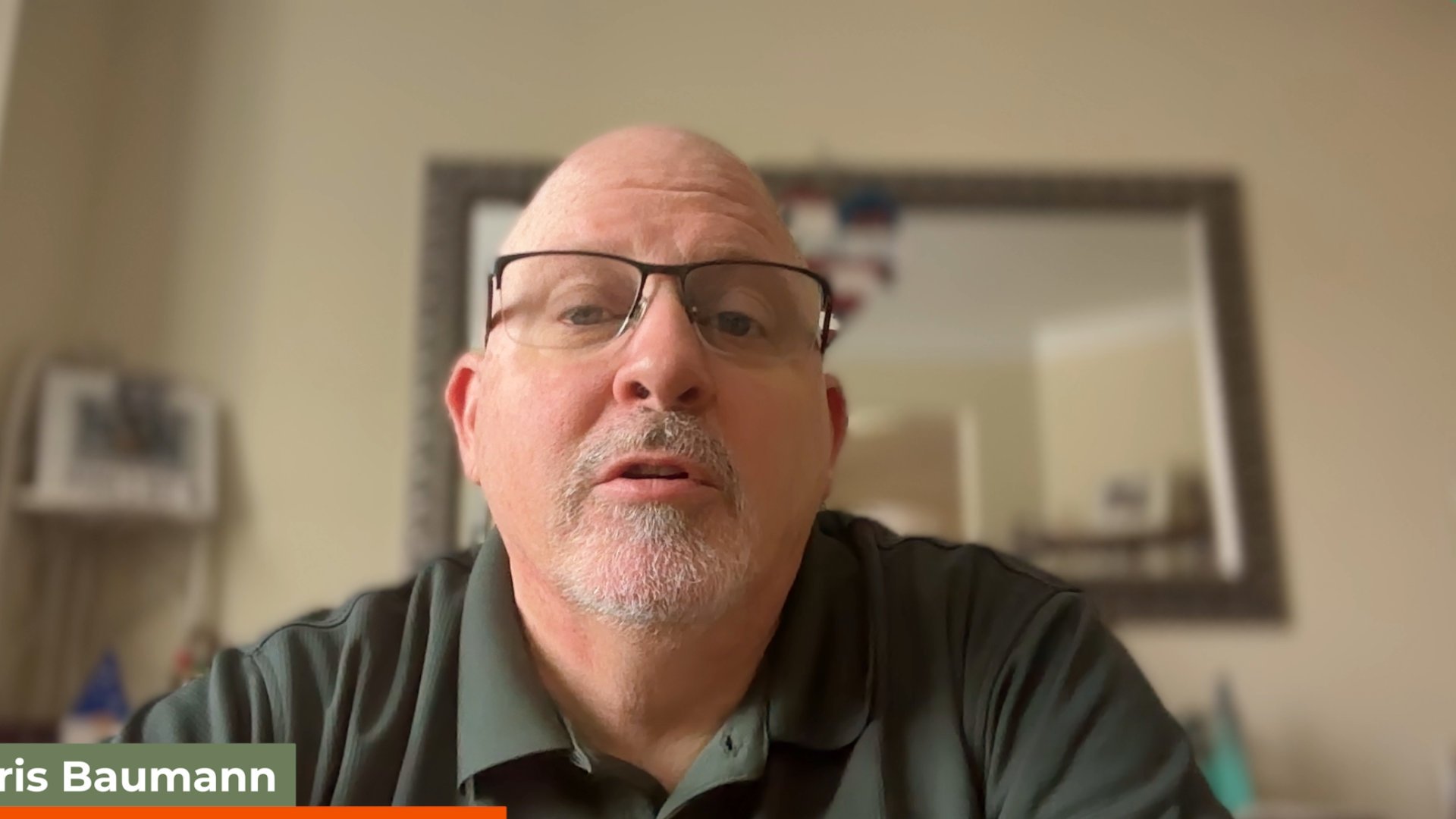
A B2B equipment reseller sells by quote, so its Google Ads are judged on what a lead costs, never on a conversion value Google cannot see: 1,500 leads at $74.91 each, December 2024 to September 2026. Pottery Pulse sold kilns in the cart and ran at 8 to 10x. Chris says so himself.
What we work on.
-
Your economics before any spend.
Margin, order value and what a customer is worth over time set the return at which an ad pays for itself. Nothing scales until that line is written down and you have seen it.
Before a dollar moves: break-even and target, in writing.
Work out your break-even ROAS -
Managed product by product.
Search, Shopping and Performance Max built around the products and searches that convert, your brand name kept apart from discovery, and budget moved to where the return holds.
Every month: search terms, products and budgets reviewed.
-
Read against Shopify.
Google Ads beside your Shopify orders and your margin, with the limits of attribution said plainly. One monthly report, written to be forwarded, that Patrick has read before you do.
Every month: what changed, what it suggests, what happens next.
A few useful questions.
Should we advertise on our own brand name?
Sometimes. The question is what those ads add that the organic listing would not. We keep brand searches in their own campaign so they never flatter the campaigns whose job is finding new customers.
Should I start with Google Ads or SEO?
Usually with the one that proves itself faster for your store. People searching already want the product, so Google Ads shows within weeks whether the economics work. SEO and AI visibility then bring in buyers you do not pay for per click. We look at demand, budget and margin before recommending either.
Who would work on the account?
Mehdi runs the Google Ads accounts at PRC. Patrick ties the work to your margins and reads every report before you do. Scope and the team are confirmed in writing before anything starts.
More client stories.
 Google Ads and SEO since 2020
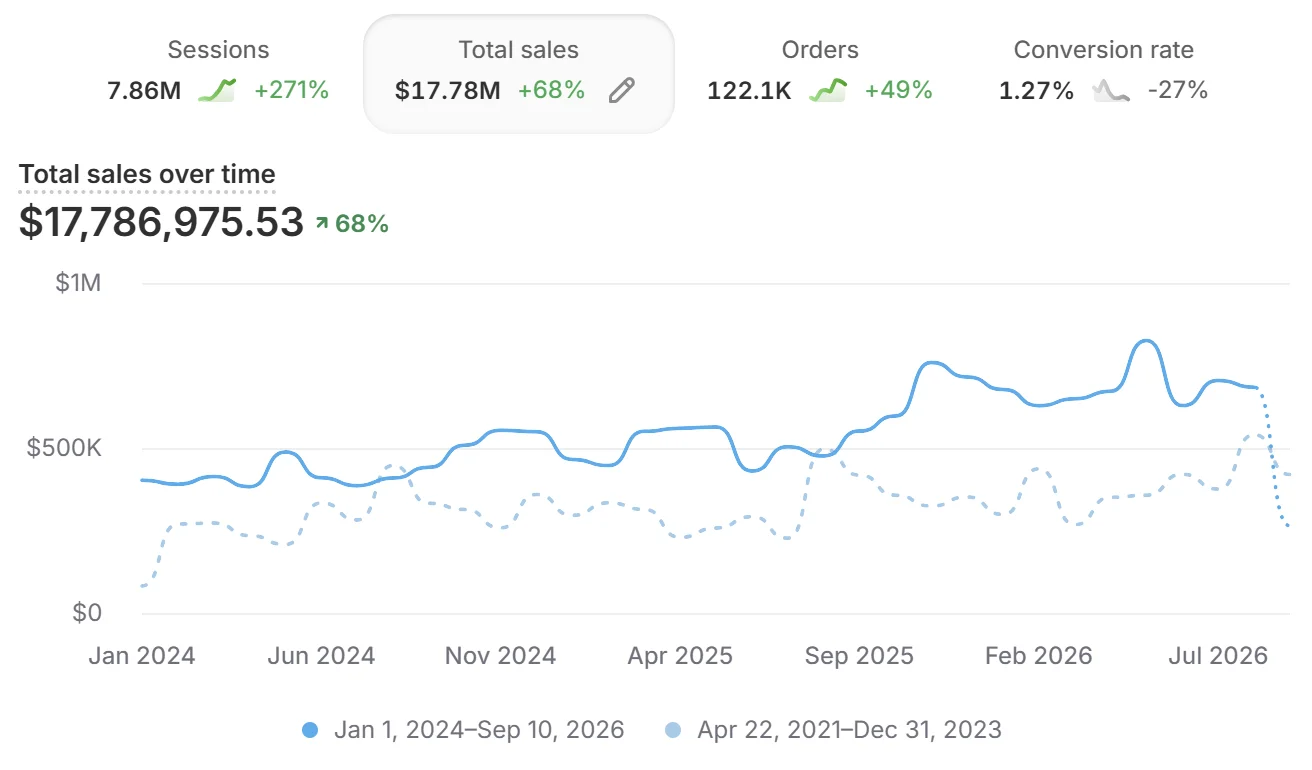
A Shopify pen store, six years in. Total store sales up 68%.
 Google Ads and SEO since 2025
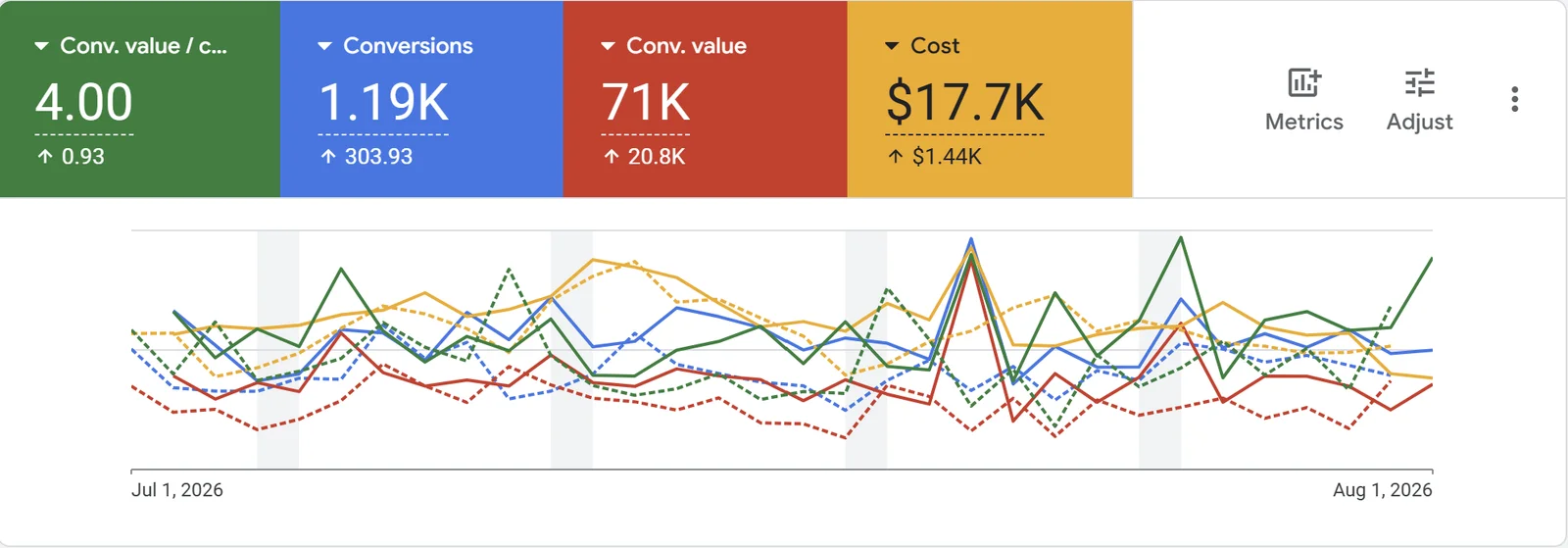
Already profitable on Shopify. Conversion value up 41% on 9% more spend.
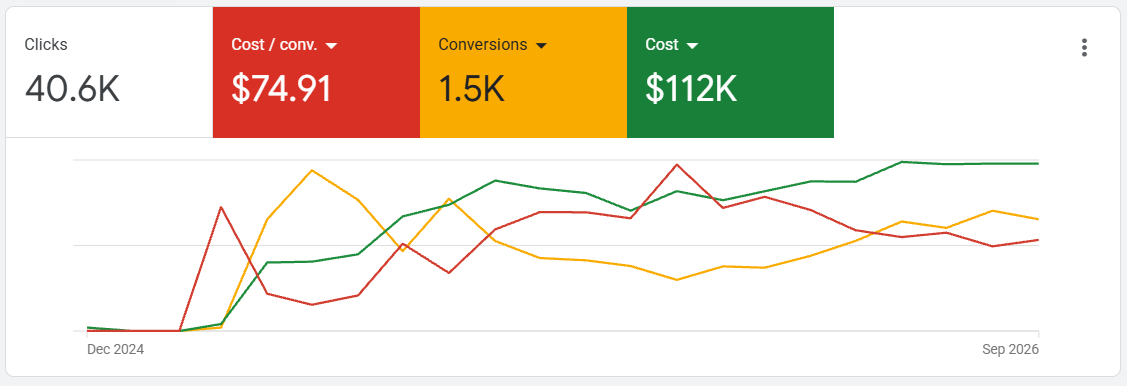
A Shopify B2B reseller. 1,500 leads at $75 a lead.
A Shopify kiln store at 8 to 10x on Google Ads. Hear it from Chris.
More customers, lower costs.
Ads bring customers now. Organic makes each one cheaper over time. We run both against what a new customer actually costs you, not what the platform reports.
- 01
Know the real numbers.
We start with a Real Numbers Sprint: your margins and attribution, because Google and Meta grade their own homework. If the product and margins can't support scaling, we tell you before you spend a dollar with us.
- 02
Manage ads to margin.
Google Ads managed product by product against real margins, not the dashboard's ROAS. Checked closely, because that's where the money leaks.
- 03
Lower the cost of every customer.
SEO and AI visibility bring in buyers you don't pay for per click, from Google and from AI answers. Each one brings your blended acquisition cost down.
Let's talk about your store. No pitch deck.
- Tell us where things stand, and we can discuss whether there's a useful next step together.
- Your answers go to Patrick. He will reply to you directly.
- Not a fit, and we'll say so.